 If you heard my interview with Austin Channing Brown in episode 66 of Seminary Dropout you might remember me referencing a piece she wrote on her blog called ‘Black Bodies White Souls‘. It’s an important read and you really need to read it in it’s entirety, but what I specifically referenced in the interview were these portions:
“I’m not giving white, Christian adults anymore easy answers. If you want to know what to do, my answer is this: risk death. …Risk the death of your dream home and “safe” neighborhoods. …Risk the death of your comfort in majority, dominant spaces. …Risk the death of your social and professional circles. Risk what we risk just trying to live.
…Choose a new neighborhood where your fate is intimately tied to the fate of people of color.
My question to Austin was -How do we give up that dream home, “safe” neighborhood, comfort in majority, dominant spaces, and social & professional circles, without simply gentrifying the places where we wind up?
This has become a very important question for me personally since moving to one such neighborhood a few years ago. I have good intentions but I know that if I’m not purposeful in the way that I live in this place I’m as likely to be blinded by my privelege, pride, and any other sin as anyone else.
Austin answered my question well, and you should listen to that episode to hear it, but the medium of podcasting only gave us so much time. Part of Austin’s answer was a friend of hers, Krista, who has done this very thing, and done it well.
Then a few weeks ago I received an email from none other than Krista herself. She heard the interview and was kind enough to write down some things that she’s learned herself. The list was so helpful and profound that I asked her if I could share it here. She agreed.
It’s important to note that these are really things that would make anyone a good neighbor in any context.
1. I don’t pretend to care. Let me explain: I think earlier in my life, I would have dialed up the extrovert in me and gone overboard in getting to know my neighbors. Now, my neighbors are a priority but there are days that I say hi and go on into my house. I used to tell my students “read the mood of the train and follow suit – if everyone is reading a book, don’t sing to your ipod. If everyone is singing to their ipod, don’t read a book.” I think I do that with my neighbors.
2. I wish you could meet my neighbor Rita. She knows everyone, and invites people to be good neighbors by asking me too. Not long after we moved here, Rita (my next door neighbor) asked that while her water was worked on she could take a shower at our house. We said yes. But I remember thinking that it probably took lots of guts to ask. She then needed to stay over a few nights due to a house work. This sounds like she was mooching, but it didn’t feel like that at all. Rita is a part of who our family is now. The interesting thing I have learned is that you find ways that others want to be neighbored. Think of it like love languages for neighbors. Rita figured out pretty quickly that the way to be a neighbor to us was helping us clean – seriously the best gift to offer us! Its random, and completely unexpected when she does, but whenever she does I could just kiss her feet! She hates to cook, and I love to cook, so she eats about three times a week with us. None of us would have happened if we hadn’t said yes to that first weird request. Neighboring is like improv, say yes and…
3. Kids make this easier. Since my husband stays home with our son full time, they know everyone in a three block radius – seriously. In fact, the amount of people that say “Hi Ben” on the blocks surrounding our house that I don’t know (when its me and Ben) is pretty crazy – but its a great way for me to meet people. I don’t say this so that everyone has kids – but Jim could chose to stay in our fenced in back yard and not know people – but they (and we) go to the local parks, the school playground up the street, etc.
4. My mom taught me from an early age to be hyper local in my interests without saying the world beyond is bad. Therefore, I am on a lot of lists in the community – we get the neighborhood newspaper but not the Chicago Tribune, any business or non-profit within a 12 block range I am on email or facebook with, there are several community activists that I follow on twitter etc. So I know my block well, but I also keep tabs on what folks are working on in terms of systemic injustice – I try to attend any events that my block feels strongly about and having a wide community support matters – because frankly it matters to my family and to those on my block. I think having kids makes me think about the neighborhood being ours more in this way as well – my kids are being raised here – I want good schools for my block and neighborhood. I want to have police act differently because I value having people hanging out on my block to be a village to my kids. If we are scared to do so, the village ends in someways for my kids.
5. When we moved in, I took down the “We Call the Police” sign intentionally. If the block decided that a neighborhood watch should go into effect, and we had a community sign – then yes, I would do it. But on my own, no way. I think I realized that I had become a west sider when I saw the police I was scared, my neighbor’s stories and at this point my own family’s interaction with the police hasn’t been good.
6. My neighbors are important and my block is important, but I don’t have to share that with tons of people. I am not doing this to prove anything. Its just life, and yes, its the life I chose in different ways than my neighbors – but I really like that I am raising my child here, that my neighbors know that I love fruit and bring any extra over for me, that one neighbor comes over when she had an American comfort food and she says “Can you make it for me?” (I have learned how to make several classic comfort dishes thanks to these requests), that two tweens come regularly to my house to hang out playing with my 2 year old and then need to run back up the block every hour or so to report that they are still at Jim and Krista’s house, that my son has three older boys to run around with that think its cool to have a shadow, and that Ben is learning three languages just by hanging out with people from our block.
Krista Dutt tries to be a good neighbor on the west side of Chicago. She enjoys cooking, exploring Chicago, and playground dates with her son, Benjamin and husband, Jim. Krista coordinates Mennonite Central Committee’s work in Chicago with Anabaptist churches. Have a conversation with her at @kristadd.



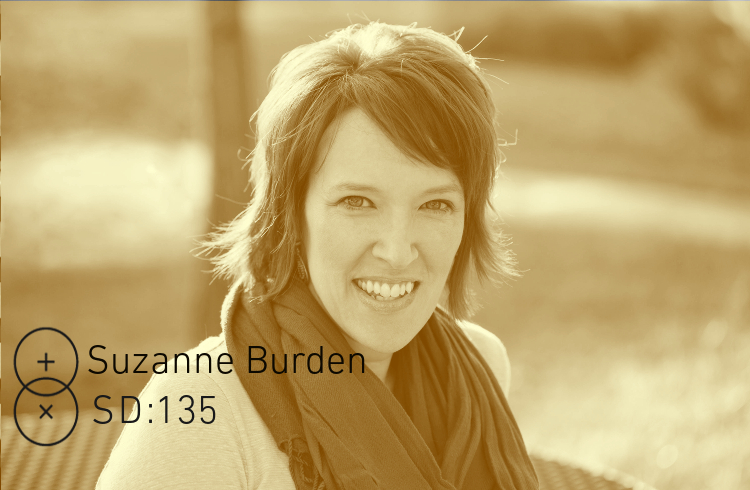 Suzanne is a graduate of Cornerstone University and Grace Theological Seminary and serves part-time as discipleship pastor at Three Rivers Wesleyan Church. She writes and speaks on living in the Kingdom of God as a joyful, right-now reality. Suzanne co-authored “Reclaiming Eve: The Identity and Calling of Women in the Kingdom of God”.




 Rachel’s new book is Searching for Sunday. SfS is about Rachel’s own journey from a simple faith too one with more complexity and subtleties. Many believers, especially of the younger generations will see much of their own story in her’s. Leaving the church, starting a new one, facing failure, and finding a different form of church, Rachel brings us along for the ride.


 deals with an issue that all Christians face but few talk about, the fact that God often seems distant and silent. Tony uses his own stories to explore what it means to follow a God who at times feels aloof.