‘Our fathers were our models for God, if our fathers bailed, what does that tell you about God?’
-Tyler Durden, Fight Club
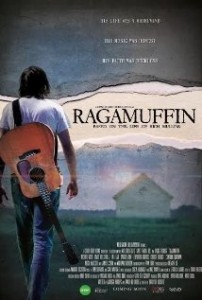 Media and Christianity have had an uneasy relationship probably ever since the reformation. Believers and church leaders incorrectly interpreting the second commandment (You shall not make for yourself an idol, whether in the form of anything that is in heaven above, or that is on the earth beneath, or that is in the water under the earth. Exodus 20:4), forbid the making of art in many cases.
I can’t help but wonder if we’re still seeing the lingering effects of that bad theology.
Most Christians with discerning tastes have completely given up on seeing a good ‘faith-based’ movie. I would count myself as a part of this group. However, non-discerning Christians, those who are blinded to the sheer stupidity and ineptitude of a faith-based movie because of it’s supposed ‘message’, they love these movies. They can’t get enough. They pay big money to rent out entire theaters to host special screenings and invite their friends to see these atrocities.
Several years ago, Fire Proof, the Kirk Cameron vehicle was released to an onslaught of Christians frothing at the mouth to see a movie that ‘promoted their values’. ‘You need to see it’, they said. ‘It’s so good’, they said. I tried to keep an open mind. I hoped for the best. Kate and I made it about 30 minutes in before we cried uncle. We couldn’t handle any more chewing of the scenery, we longed for a world with a trace of subtlety and nuance, and our intelligence was insulted.
Word to the wise: The message can not be separated from the medium.
Speaking of the message; most faith-based movies seem to be reversed engineered starting with the Sunday school lesson, adding as many tired tropes as possible, awful acting, ham-fisted writing, police interrogation room lighting, and uninspired directing.
I say all this to set the stage for the attitude I had while going into Ragamuffin. I could only assume I was Charlie Brown in a full sprint towards Lucy holding the football that would surely be pulled away at the last second, yet again.
Ragamuffin, a bio-pic about Contemporary Christian Music artist Rich Mullins, opens with pages sheet music floating to the ground in the distance against a black background while the voice over of the character who the viewer comes to know as Brennan Manning says…
‘I am utterly convinced that on judgment day, the Lord Jesus will ask one question and only one question: Did you believe that I loved you?’
A glimmer of hope. Might this really be any good?
One things for sure, it’s visually beautiful. Interrogation room lighting is nowhere to be found. The quality cinematography and colorization go a long way here.
The film isn’t perfect, in fact it’s messy in parts.
The acting is sometimes uneven. The actors playing peripheral characters struggle a bit, and a few lines are delivered with misplaced enthusiasm. The star Michael Koch is also spotty in places, but when he’s good, he’s really good, his hurt feels real, his joy is palpable, and his singing voice is a spot on Mullins.
There are places in the movie that fall into traps that for some reason are common to faith-based movies. The set and set pieces
sometimes can take the viewer out of the moment especially in scenes of decades past. Among scenes taking place in the 70’s & 80’s, the interior of a house looks a lot like a house built in the 2000’s, a dodge van looks like a late-model, the headphones look an awful lot like the brand new ones I use to podcast.
In a scene in which Rich sees a movie about St. Francis that will forever change the trajectory of his life, the movie within the movie seems hastily thrown together. It’s just one scene but the actor playing St. Francis looks like a guy pulled out of line at the Taco Bell down the street, his hair flipped up in just right spot and side burns shaped ever so purposefully. These details don’t make or break a viewing experience. Despite what people say this is not why Mad Men is so popular. Meticulous period design by itself is not enough, but these details that can really come together to immerse the viewer in the experience or distract them from it.
The vintage scenes aren’t the only ones that needed a little help. The car belonging to Rich’s music producer has a dent in it featured so prominently in one shot you think it has to come into play in the plot at some point. It doesn’t.
Rich himself, never ages. 1974 Rich looks pretty much just like 1997 Rich. Long hair and facial hair come and go and come again, but really Rich never looks older in the passing years.
The last bone I’ll pick with this movie is the framing device of Rich giving a radio interview that serves as a narration of the movie. Sometimes this comes off as lazy. They say that great writers ‘show instead of tell’. This seems even more true for movies.
Nevertheless, it occurs to me that most if not all of these problems are budget issues, and they aren’t so glaring that they ruin what the movie has going for it.
The subject matter is solid. Rich Mullins has always been a fascinating and inspiring figure, sadly in part because he was such an anomaly. Before I saw the movie I knew the highlights of Rich’s life: although he earned big money from his music career he only took the salary of an average American, he felt a calling to live on a Navajo Reservation to teach music to children, and he died tragically in a car accident. Self sacrifice and oaths of (near) poverty, are not hallmarks of recording artists, Christian or otherwise. Oh and the other thing about Mullins, if you grew up in Evangelicalism in 80’s or 90’s, you sang his songs whether you knew they were his or not.
The parts that most people don’t know about Rich are somewhat shocking. Less shocking that they were struggles of his, and more shocking that a movie marketed to Christians disclosed it.
Rich was a real flesh and blood person who had real struggles. Throughout his life he struggles with loneliness that manifests itself in odd ways like chastising his house and band mates for not leaving a note when the leave the house or hotel. In the midst of an ill-fated engagement he finds that he still can’t escape loneliness.
 Rich has daddy issues that are unrivaled. Rich’s dad was a tough as nails farmer, the no-nonsense, I can’t tell you I love you because I don’t want you to be soft – type of dad. This narrative of not being able to please his father plagues Rich for most of his life. In the ever-present radio interview/voice-over, Rich explains…
‘Growing up people would always say to me that God loved me, but I don’t know, I had a hard time believing that , I wondered if God even liked me. I don’t know, maybe it’s because people also told me that my dad loved me.’
This would be the basis for Rich’s disconnect with God for much of his life. It’s a disconnect that many people I know have had because of strained, absent, or downright bitter relationships with their fathers. In fact many within Christianity have given up referring to God as their ‘heavenly father’ while praying because their biological fathers have ruined the concept.
Rich comes across a tape of a sermon by Franciscan priest Brennan Manning. Those familiar with modern Christian literature know Brennan from his book ‘The Ragamuffin Gospel’, in which Brennan discusses his own alcoholism and his need for God’s radical grace. It’s a modern classic. Rich is so moved by Brennan’s words on that tape that he seeks him out. For someone whose life has been enriched by both of these men, watching them sit across from each other is a little bit like watching Batman talk to Superman in a cross-over issue of Detective Comics (that may be the nerdiest thing I’ve ever written). I won’t go into the details of Brennan & Rich’s relationship because I don’t want to spoil it, but the name of this movie will give you an idea of the impact Manning has on Rich. The real reason I bring this up is because Charles Lawlor’s portrayal Brennan is simply amazing. From reading Brennan’s writings and hearing second-hand stories, Lawlor’s Brennan Manning is exactly who I imagine him to be.
 Rich’s loneliness and the daddy issues are accompanied by his own alcoholism. Therein lies this movies greatest strength – it’s willingness to be honest. Faith-based movies simply do not show their protagonists having real flaws like drinking alcohol to access (and chain-smoking for that matter), and sometimes being kind of an ass to their friends, unless it’s to draw a contrast from their heathen pre-Jesus days, to their holier, steadfast, pure as the driven snow days as a follower of Jesus. Rich had those struggles and Ragamuffin features them bluntly.
The flaws are just a part of the whole of Rich’s life that Ragamuffin skillfully portrays with subtlety and nuance. Rich is also genuine, honest, and unassuming in everything he does. While in the beginning of Ragamuffin I was distracted by those relatively small flaws that I mentioned earlier, I found that somewhere along the way I became deeply invested in this person and profoundly moved by his trials.
Little gems like Rich calling out the contemporary Christian music industry are like a love letter from Rich to the other Christians who love Jesus but hate what modern Christianity has come to represent.
“All these cheesy artists trying to make a buck off of his name. It makes me want to puke.”
Me too Rich, me too.
He tells his producers:
“Look guys, my songs aren’t fill in the blanks, you can’t just add the word ‘Jesus’ in a few more times and expect it to be better… I’m not trying to be a Christian pop star here. I’m just trying to say something true.”
I’ve said something eerily similar in the past about CCM having a quota of “Jesus’s” to forcibly insert into each song. This is truly what makes Ragamuffin a faith-based movie for the rest of us. Here is Rich saying – I’m cynical about the same stuff you’re cynical about. Rich get’s us.
Rich was broken and flawed and came to know that God loved him in that state.
A few odds and ends.
- There is cursing in this movie (*gasp* *clutches pearls*). People in a movie acting like people in real life, what a concept!
- Before deciding on Michael Koch to play the role of Rich, the director almost chose Henry Ian Cusick for the role. Many know Cusick as Desmond ‘see you in another life brotha’ Hume from ABC’s Lost.
- Look for my interview with the director, David Leo Schultz, coming soon to Seminary Dropout.

 Christian Piatt is an author, editor, speaker, musician and spoken word artist. Currently he serves as the Director of Acquisitions and Author Development for CrowdScribed, and as the Director of Growth and Development for First Christian Church (DOC) in Portland, OR, of which his wife Amy is the Senior Minister.
 Friends David Gungor & John Arndt together form the band, The Brilliance. As I say in the interview, they sound a little like a score from an M. Night Shyamalan movie (one of the good early ones), with a little bit of Ben Folds, and David Bazaan thrown in at times, and at the same time it’s something completely unique and groundbreaking.









 Christena Cleveland is many things, she’s a social psychologist, a gifted teacher, a consultant to pastors and leaders on multicultural issues, but she is also a Jesus follower who has used her expertise and research to call the church to unity through diversity. In
  , Christena aptly points out that simply saying that the doors are open and anyone is welcome is not the
 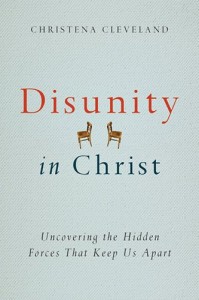 same as pursuing diversity, and that