3 Better Things to Worry About

It’s not that I’m not disturbed by some things that I see going on in the world. I’m bothered. But more than that I’m bothered by the fact that I’m most bothered by the wrong things. This post is not meant to diminish the issues that people are working out, and this is not one of those – ‘let’s put our love before our theology’ posts, because I reject the idea that love and theology are mutually exclusive. This is about the simple fact that we can hold theological convictions and get on with living missionally at the same time.

jesusloveyou

1. It’s okay to talk about the possible pros and cons of World Vision changing it’s hiring policies concerning the LGBT community.
What’s better is to struggle and be moved to action with the thought of children across the world dying of starvation, and unsanitary conditions. It is more urgent to be caught up in the plight of kids who have little hope without a good education and the good news of Jesus. Concern for these matters are what Jesus says will be used separate the sheep from goats. (Matthew 25:31-46) Your stance in a culture war will not be brought in to consideration when sheep are separated from goats.

2. It’s fine to be concerned for a company like Hobby Lobby to operate on a pro-life ethic that it’s founders hold dear. 
What’s better is to exercise a pro-life ethic in our day-to-day lives by supporting adoption, refusing to take part in or supporting violence, and to work to alleviate conditions that make abortion seem like the only option for so many people. The fact that so many of us who call ourselves Christ followers have been given so much power to enact change and yet do so little, that should be what haunts us most.

3. It’s permissible to talk about Chick-fil-A CEO Dan Cathy’s comments about gay marriage and to show concern for what the future holds for Christian business owners who make public statements about their moral convictions. 
What’s better is to show more concern for the LGBT community. To worry more that an entire contingency of people do not know Christians by their fruits of love, joy, peace, patience, kindness, goodness, faithfulness, gentleness and self-control.  Almost none of these could, in general, describe the modern response of Christians to this community. What should bother us most, what should keep us up at night is knowing that there are people who don’t know that Christians love them unconditionally.

Your Church Shouldn’t Be So Special

Some of you know that I helped plant a church and served as its pastor for about 5 years. Like most churches we had our ups and downs, our weaknesses and strengths. One thing was for sure, we didn’t have impressive stats. We were small. In our best times I bet we averaged 60 people at a gathering. We didn’t have tons of baptisms to report either (our denominations favorite metric for determining if God approved of your church). It wasn’t that we didn’t believe baptism was important, but in that town’s strange brew of deep seeded Christendom, entrenched routine, and a good dose of ‘I’ve been baptized twice already but Jesus really has nothing to do with my daily life’, it just wasn’t the season for baptism.

The one thing that encouraged us in the midst of those realities, was the fact that much of our church consisted of people who would not be at another church if ours didn’t exist; those who wouldn’t feel good about going to other churches, felt that they were too ‘churchy’, and didn’t speak the language of the young and jaded. We were special, we were the refuge for the cynical and weary.

Churches like that are more abundant these days, especially in bigger cities. I’m glad. There need to be churches who specialize in tending to the wounded, where for a time, those people just take in nourishment.

The problem comes when a church doesn’t help people recover, and unknowingly causes them to establish a personal identity of being wounded (By ‘wounded’, I’m not talking about a type of brokenness that we as human beings live in by recognizing our sin).

To oversimplify it, Jesus came so that we could be saved from our wounded state, not wallow in it.

I’ve heard of multiple instances of these churches falling under their own weight. Too many people are just being fed and aren’t doing any feeding, too many are wounded and not finding healing and it can’t be sustained over the long haul. Many of those people won’t simply find another place to belong in community, because they don’t know how to see past a difference in philosophy or method, they only know the first church was so special that what they had can not be created or found anywhere else.

We need churches with large front porches designed for welcoming people who might be afraid and suspicious of what the inner rooms hold, and that given their history, might find it too hard to walk into the deeper rooms. But those churches need to help people mend, gain strength, and grow on those front porches instead of encouraging them to make the front porch a permanent place to camp out forever.

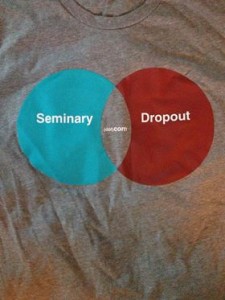
Seminary Dropout T-shirts are here!

Presenting the first ever Seminary Dropout T-shirt. This is a VERY small batch so they won’t last long. This is a great way to support the show, because hey, you gotta wear clothes anyway, right?! Plus, these are super soft and comfortable!

Most of you know that Seminary Dropout is a very DIY operation, so in that spirit you’ll notice that I don’t have a high-resolution photo of the shirt, no e-commerce store (although you will pay securely & easily online), and no fulfillment center, just me putting your shirt in a container and shipping it to you.

The shirts are $19. Email me at shane@shaneblackshear.com with the number of shirts & sizes you want, and your shipping address.
tshirtcloseup

tshirt

3 Ways the Church Can Talk About Sex Better

1. Encourage singleness and celibacy as a strong viable option.

Oh how we’ve gotten this wrong.

There are some scriptures the church just flat out doesn’t like. Case in point, Paul’s exhortation – “To the unmarried and the widows I say that it is well for them to remain unmarried as I am.”(1 Cor. 7:8) Some translations even say “…it is better for them to remain unmarried…”.

Too much of our modern church revolves around the coveted family unit. Our churches host marriage conferences, provide parents nights out, and offer marriage counseling. There’s obviously nothing wrong with any of that, but we’ve got to ask how we’re welcoming, accommodating, and caring for the single person. Singles ministries withing churches need to a place for single people to do kingdom work together and not an easy place to find the last single people to hook up with.

This problem is most glaring when we teach that the reason for sexual purity is because “God has someone for you”. What if he doesn’t?! What if his desire for that kid in your youth group, that 20 something in the your small group, or that widow in your pew  is to remain single so that they can be focused on as Paul puts it “the Lords affairs”.

We speak outside of scripture and give promises that God does not give when say or imply that the reward of a sexual purity is a spouse. Furthermore, that is simply an inappropriate motivation for the Christ follower to wait until marriage. Christ himself should be the motivation.

2. The emphasis must be on sexual purity vs. “virginity”.

Way before The Bachelor, the church had it’s own little rose ceremony. If you grew up in the church any time after 1980 then you have probably been subject to The Rose Ceremony. Someone produces a rose and has everyone in the room touch it and feel it, while he/she lists off a laundry list of reasons why sex before marriage is a bad idea. Often times in this laundry list, little or nothing is actually said Gods holistic design and desire for sex in the life of the Christ follower, rather time is spent talking about the dangers of STD’s and how being a teenage mom or dad will destroy your life. Also, bonus points for doing that thing where you hold a role of masking tape and put a sharpie market through it to illustrate the size of microscopic holes in a condom compared to the size of an STD. At the end of the virginity sales pitch the rose has made it’s way around the room and back to the speaker. The speaker then takes the now wilted and decrepit rose, holds up a new rose in pristine condition, and asks the captivated audience “Now, who wants this rose instead of this one?” Fade to black.

Of the myriad of things wrong with this picture, I’ll constrain myself to the most flagrant. Leave it to human beings to replace God’s desire for sexual purity with something like virginity (something that is lost and cannot be recovered). The God of the Bible does not seem to be concerned with virginity but rather sexual purity, and contrary to what some have taught, those are two different things. A person who does not fit the dictionary definition of a virgin, can still be sexually pure through the transformation offered by Christ. On the same token someone can be a virgin and be far from sexually pure.

Obviously, sex even once, outside of it’s proper place is not consequence free and indeed many have endured some hardships because of it, but to emphasize something that is lost and can never be recovered is simply the antithesis of the Gospel. Our hope in Christ is that he can redeem all things, including our sexuality.

3. Talk about sex within the context of a complete life of the Christ follower.

For someone on the outside looking in, it probably looks like Christians are obsessed with sex. We tend to gravitate to one of two extremes. Either sex is a dirty word that we never talk about and when sexual immorality takes place it receives the deepest shame to the point that members of the body feel judged and unwelcome OR in an attempt to show the greater culture that we Christians have just as much super awesome sex as everyone else, we hyper sexualize everything. This over-sexualizing happens in subtle ways, like the pastor who declares that his wife is “smoking hot“. Rather than following cultures lead or simply doing the opposite of culture, we must first follow Christ with our life and then see what that means for our God-given sexuality.

Seminary Dropout 028: Mary Demuth on Sexual Abuse & Healing.

Listen in iTunes

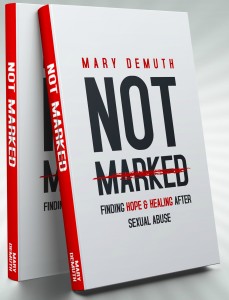
In her second visit to Seminary Dropout, my guest Mary Demuth joins me to talk about her 201100629-DeMuth057newest book, Not Marked: Finding Hope & Healing After Sexual Abuse.

NOTMARKEDsmallerNot Marked is Mary’s first hand account of sexual abuse as a child and her healing. Mary tells her story in raw honesty and vulnerability to help not only those who have been sexually abused but also those who love someone who has been sexually abused.

The Book: Not Marked: Finding Hope and Healing after Sexual Abuse
Mary’s site and blog: MaryDemuth.com

Subscribe/Rate/Review Seminary Dropout in iTunes
Remember you can support Seminary Dropout by clicking the “Support” tab above. 

3 Views on the Bible

The idea for this post came from a conference I’m attending next month. I’m not a speaker, and I have no formal ties to the those putting it on, I just think the theme of the conference is so significant for the future of Christianity that I’m making the trip half way across the country to attend. This post explains a little of why I think it’s so important.

Many scholars more education than I, have presented the various Biblical perspectives with more nuance than 3 categories allow. This is a more simplified look at those views and takes a more “on the ground” approach.

1.) The Bible should be taken literally in the strictest sense.

You don’t have to dig very deep to realize that there really are no true adherents to this position, only those who claim to adhere to it. In fact that’s why I left fundamentalism many years ago, it simply didn’t play by it’s own rules. Fundamentalism hangs it’s hat on taking the Bible literally and using it as it’s sole guide. It’s simply not true. No group within modern Christianity, and especially any fundamentalist groups, follow Paul’s decree in 1 Thessalonians 5:26 to “Greet all of the brethren with a holy kiss.”

Not only that but fundamentalist add prohibitions that the Bible doesn’t contain. Until I was embarrassingly too old, I believed that drinking alcohol was a sin, because that’s what I was taught in fundamentalism. The Bible does not prohibit alcohol and any attempts to make the Bible say this are more than a stretch. On the other hand, Jesus’s first miracle was changing water to wine (the stories fundamentalists have come up with to explain this away are hilarious, btw), and Paul instructs Timothy to take alcohol with him on his journey.

Those in this category might believe that the Bible itself holds authority, instead of believing that God himself exercises his authority through scripture. Some even interpret John 1:1 (In the beginning was the word…) as speaking about the scripture when it says “the word”.

2.) The Bible is inspired and literal in the ways that it’s authors intended for it to be literal. 

This is perhaps the most dominant view within Christianity, and spans across a large theological spectrum, because while this group agrees that the Bible requires interpretation, they might strongly disagree with each other on what the correct interpretation is.

To use the same example above, 1 Thessalonians 5:26 would not only be interpreted as saying that Christians should simply greet each other in love, but this group would also believe that Paul himself did not intend for that statement to be taken literally by all people in all time periods.

Texts like the creation account might be interpreted with numerous subtleties from person to person, but many would believe that the writers never intended for the reader to take things like a 7 day creation literally and that the purpose of the story is simply to begin the narrative of Gods redemption of the world. Thus many would see no conflict between science and the Bible.

Those in this category believe that Bible is authoritative in so far as God communicates his authority through it.

3.) The Bible is a racist, sexist, and homophobic book, and we should acknowledge that and focus on Jesus’s message of love. 

This view is small but growing. Many in the second category might agree with some of the conclusions of this group, but would maintain that a proper interpretation of the scriptures is what led them there.

Those in this last category may have an interest in proper interpretation, but ultimately believe it is inconsequential since the Bible holds no or very little authority and was written by a group of people who were less enlightened as modern readers.

Why are these views important?

…because I believe that they will structure the face of Christianity in the years to come (specifically views 2 and 3). In the age of Christendom, believers took for granted that scripture was authoritative, but we are coming out of that time. I think this is a good thing, not because I don’t believe that scripture is authoritative (I put myself in category 2), but because we are now forced to examine the nature of scripture and ask questions about why, how and in what manner it is authoritative.

That’s why I was immediately drawn to the Ecclesia National Gathering and it’s theme:

In a Western context that is increasingly suspicious of, if not hostile toward, sources of supposed authority and at the same time, constantly presented with new ones, it is little wonder that questions about the authoritative role of Scripture have become such a pressing issue.

Mission in North America then must involve turning our collective attention to how we understand and engage, corporately and personally, the Bible. The Bible is not a document – it is the unfolding drama of God. As Christians, it is our one and true story for the whole world. It’s authority in Christ is extended into our very lives by the invitation of the Spirit as we participate in God’s work. We therefore cannot know it’s authority apart from mission and by experiencing it’s authority over our lives in the hearing of it as God’s Word and responding to it in obedience. Yet, many questions remain as to how we are to read, submit, teach and preach this great story in an increasingly secular, post-Christianizing society.

This year we are joined by Dr. Scot McKnight, world renowned author and professor of New Testament at Northern Seminary. We are also delighted to have Dr. Bill Webb join us this year. Bill is well-known for his ground-breaking work on hermeneutics through his book Slaves, Women, and Homosexuals and subsequent writings. We will also be joined by Dr. Al Tizon of Palmer Seminary and author of Missional Preaching and Mandy Smith, Lead Pastor of University Christian Church in Cincinnati, OH. Mandy is also the author of Making a Mess and Meeting God.

I only plan on traveling to one conference this year, and because I know this will be a quality event, this is the one. The gathering is February 25-27, 2014 and you can find out more at EcclesiaGathering.org.

What category are you in, if any, and why? Be sure to be fair to those in other categories. 

Top Books of 2013

A more accurate title would be “Top Books I’ve Read in 2013”, because this is solely based on my opinion, and because my criteria was that I had to have read it this year, but all of the books were not necessarily released this year. Also, it’s important to note that, yes, most of these books were written by Seminary Dropout guests, which may seem self serving, but honestly just reading the books of SD guests (which I must do to conduct the best interviews possible), leaves me little additional time for reading anything else.

Eight books made the list. I realize that eight is an odd number for this sort of list, but I felt that it would be better to leave it at eight, rather than round it up to ten and fill it in with books that, while good, may not be “Top Books”.

Now, on to the good stuff…

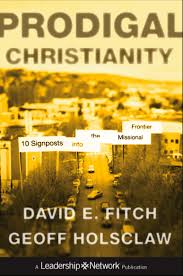
8. Prodigal Christianity: 10 Signposts into the Missional Frontier by David Fitch & Geoff Holsclaw

pc

Written by David Fitch & Geoff Holsclaw, both pastors at Life on the Vine in the suburbs of Chicago, and Seminary Professors at Northern Seminary. Prodigal Christianity is a playbook of sorts for those practicing ministry in the middle. If the liberal and conservative extremes just don’t fit for you, then this is required reading.
PC takes years of Fitch’s accumulated notes (both written and mental) on ministry and church that have informed his ways of doing ministry with added input by Holsclaw.
My interview with David & Geoff.

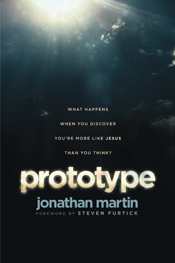
7. Prototype: What Happens When You Discover You’re More Like Jesus Than You Think? by Jonathan Martin

prototype bookThe thing I remember most about my interview with Prototype author Jonathan Martin earlier this year, was that I remember feeling that I was conversing with a true pastor, a shepherd. Some have this gift, but most don’t, the ability to make others feel loved and cared for in the tone of your voice. Somehow Martin conveys this in the written words in his book. Prototype isn’t one of those –who care’s if you sin, it’s no big deal because grace, type books, instead Prototype invites the reader to really imagine that God is for them not against them. That the mere act of believing that God delights in you, is revolutionary in the life of the believer. Find your “boy on the bike”.
My interview with Jonathan.

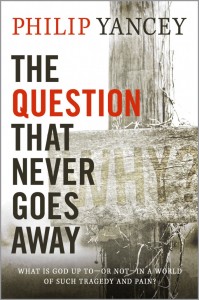
6. The Question That Never Goes Away by Philip Yancey

The-Question-That-Wont-Go-Away-Book-Cover1-682x1024

A friend recently told me was having a hard time getting through this book. He’s reads a lot, and the book isn’t long. The reason he was finding it difficult to finish in a few sittings is due to Philip Yancey’s unrelenting desire to tell the truth. Many attempts to deal with the problem of evil have a few fatal errors, one is the saying that maybe the suffering isn’t so bad, the other is saying that maybe God’s causing the suffering for his glory. Yancey will have none of it. Building on what he’s already written in Where is God When it Hurts, and Dissappointment with God, Yancey takes his exploration to the field, recounting his experiences visiting the aftermath of the shootings in Newtown, Fukushima, and sites of other disasters. In Yancey’s usual style he stays away from systematic theology opting instead to deal with scripture on it’s own terms.
My interview with Philip.

 5. Benefit of the Doubt: Breaking the Idol of Certainty by Greg Boyd

benefit-of-the-doubt

It’s not a huge secret that I’m a huge fan of the words of Greg Boyd, and with Benefit of a Doubt, Boyd outdoes himself yet again. I honestly thought this was going a be a well written “it’s ok to doubt” books, with some good points. But Boyd was serious when he titled it Benefit of a Doubt. Boyd skillfully breaks down the futility of the psychological trick many employ to have more faith, while exposing the anti-intellectualism that often comes from the belief that doubt is the worst thing the world, and a slippery slope into walking away from faith all together. He shows that having a more skeptical and critical thinking mind is not sinful, but a gift from God and that this natural doubt that comes out of it can serve to deepen our understanding about who God is and actually deepen our faith (wishing there were a less cliche way of saying ‘deepen our faith’).
FYI- look for an episode of Seminary Dropout featuring Greg Boyd soon!

 4. Jesus Feminist: An Invitation to Revisit the Bible’s View of Women by Sarah Bessey

Jesus-Feminist-Cover-copy

This book was long over due. Jesus Feminist is not an exhaustive apologetic for women having an equal voice in church and at home, it’s better. Jesus Feminist is writer Sarah Bessey’s account of a life on both sides of these issues. How the entire body of believers suffers when women are silenced and the beauty of that body when women are empowered. From opening Sarah disarms any readers that might be uncomfortable with the concept of Christian Feminism. Sarah isn’t so much concerned about labels as she is Christians following the example of Jesus of empowering women as well as interpreting the words of Paul correctly. Readers of Bessey’s blog know that she’s a superb writer and it shines in this important read.
My interview with Sarah.

  3. Preemptive Love: Pursuing Peace One Heart at a Time by Jeremy Courtney

7634-preemptive love.220w.tn

They say that good stories happen to good writers. It also can’t hurt if you’ve transplanting your family to Iraq and started a non-profit that helps Iraqi children get life saving surgeries. And on top of that Jeremy Courtney is an excellent writer. This is not surprising, knowing Jeremy personally, I know that he does most things well.
Preemptive Love is Jeremy’s honest account of moving to Iraq with his family and finding out what it means to pursue peace. PL is half memoir and half adventure novel, and it’s all true. I wouldn’t be surprised if this is made into a movie someday, it’s got all the necessary components. You’ll be devastated when Jeremy relays the stories of others describing how Sedam Hussien used chemical weapons on his own people and the repercussions that are seen still today. You’ll also see the amazing hope being brought to people through the Preemptive Love Coalition Jeremy founded.
My interview with Jeremy.

2. Surprised by Hope: Rethinking Heaven, the Resurrection, and the Mission of the Church by N.T. Wright

surprised by hope (1)

Yes, this came out in 2008, but I’m just getting to it now. I have to say – better late than never. The reason this book has been so popular is because it so thoroughly debunks some prevalent teachings that the church has been giving for years. Most of us were taught: When we die, we go to heaven, the end. But, as Wright so eloquently shows his reader “Heaven is a big deal, but it’s not the end of the world”. When you see the book, you may wonder why it takes so many pages to make his point, but I assure you, there is no waisted ink in this book. To the contrary, I don’t know how many times Wright says something like “unfortunately that requires more time that we have at the present to discuss” (maybe an idea for a fun drinking game at your next book club meeting?). Bottom Line: This is required reading for the serious believer!
I’m dying to get an interview with N.T. Wright, so if anyone has any connections, hook me up!

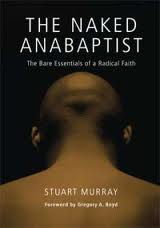
 1. The Naked Anabaptist: The Bare Essentials of a Radical Faith by Stuart Murray

thenakedanabaptistA book with a seemingly narrow niche target audience may seem like an odd pick for the #1 slot. I assure you, it’s not. Even if you don’t have the slightest Anabaptist orientation and aren’t interested at all in the conversation, this book has some things every Christian should take notice of. If for nothing else but the books discussion of Christendom ushered in by Constantine, and how it changed (many would say perverted) the idea of what it meant to be a follower of Jesus. The author Stuart Murray writes so that the story of Anabaptism and Jesus-following of the early church, gets across in an accessible and easy to understand way. I find this message so important that this book will be given to many of my family members this Christmas.


My interview with Stuart.

Now it’s your turn. What other books would be on your list this year?

I Don’t Need MMA Jesus

I had a friend in college, a talented artist who worked exclusively in ink drawings of MMA Jesus. MMA Jesus almost always stood on a hill, sword in hand and maybe a lion by his side. As the name alludes, MMA Jesus was a large (most often Caucasian) man with ripped abs, bulging biceps, and super handsome. He was the whole package ladies.

MMA Jesus is worshiped in churches all over the country these days, but I had forgotten about the drawings until I was at the gym last Sunday and ran into a sign for a church that was apparently meeting in the building. And there he was…

photo (2)


I wish I could track the origins of this mans man Jesus. My thought is that he probably came around in the late 90’s. No doubt there had been attempts to over-masculinize Jesus in the past and balance out the sometimes admittedly flowery language used to describe Jesus and the Jesus-following life. But in the late 90’s to early 00’s something changed. It’s probably about this time that Mark Driscoll proclaimed that church was too feminine. I think Driscoll was speaking of the actual physical appearance of the church, the decorations, but what do you expect when one of the few jobs women are allowed to do in your church is decorate. Around this time a flood of books were published having to do with masculinity and Christianity, such as John Eldridge’s ‘Wild at Heart: Discovering the Secret of a Man’s Soul’.

I remember reading in one of these books (it may have been WaH), that Jesus spent his days walking from town to town, so obviously he was not a frail scrawny man, but a lumber jack with legs of an oak tree. This strikes me as funny, because you know what people who walk a lot look like…

Robert_Heffernan_6377Well Robert Heffernan, Irish race walker of course! When you factor in the nutritional intake of a person in Jesus’s time, he would probably be even thinner than Robert.

Why does this matter?

It matters because the reason MMA Jesus was invented was to project on him, character traits that are diametrically opposed to Jesus’s true character. The opposite of the radical, upside-down kingdom Jesus.

Mark Driscoll says he can’t worship a guy he can beat up. What an odd metric to use in deciding what qualifies someone to be worshiped.

It looks as if we’ve turned the subversive, ‘the last shall be first and the first shall be last‘ Jesus, into ‘every other worldly leader we’ve ever seen‘ Jesus, and that should be a wake up call.

We worship the Jesus about whom it was prophesied…

he had no form or majesty that we should look at him,
    nothing in his appearance that we should desire him.

Who said…

…Blessed are the meek, for they will inherit the earth.

…Blessed are the peacemakers, for they will be called children of God.

…You have heard that it was said, ‘An eye for an eye and a tooth for a tooth.’ But I say to you, Do not resist an evildoer. But if anyone strikes you on the right cheek, turn the other also;  and if anyone wants to sue you and take your coat, give your cloak as well…

This is the Jesus who did not take a life, but gave it. The Jesus who rode into town, not on a war-horse, but a donkey. The Jesus who does not yell, but speaks in a still small voice.

MMA Jesus or any other Jesus made in our image is useless to me. I need the man from Galilee, the real Jesus.